
KINESIOLOGY TAPING
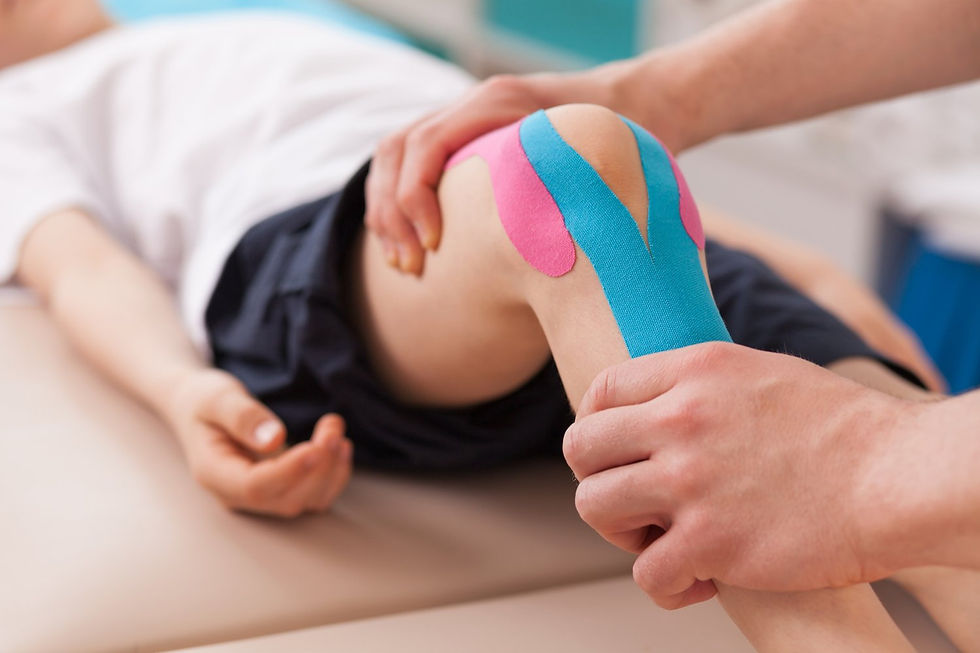
At Kinex Health, our Clinicians use Japanese-originated Kinesio Taping as a rehabilitation technique that uses the skin as a therapeutic interface to influence the nervous, circulatory, and musculoskeletal systems.
Kinesiology taping, also known as kinesio tape or K-tape, is a type of elastic therapeutic tape used to support muscles, reduce pain, and improve circulation. Kinesio tape contains either 100% cotton and elastic fibres or a blend of polyester and cotton with elastic fibres. It is used to treat pain, soft tissue injury, tissues and joints malalignment, oedema and more. It assist patients in recovering from injuries and conditions that interfere with their movement, daily activities or maintaining a state of well-being. The unique elasticity and application method of the tape work synergistically to promote the body's natural healing mechanisms.
Benefits of Kinesiology Taping:
Pain Management
-
Reduced Pain: The tape provides a constant, gentle lift to the skin, which can interfere with pain signals leading to immediate and localized relief
-
Decreased Pressure: It offloads pressure from painful or inflamed areas, providing comfort during movement
Improved Circulation and Reduced Swelling
-
Enhanced Lymphatic Drainage: By gently lifting the top layer of skin, the taping creates space in the tissue beneath which allows better flow of lymphatic fluid thereby, reducing swelling, oedema, and bruising more quickly
-
Increased Blood Flow: Improved local circulation delivers necessary oxygen and nutrients to injured tissues, speeding up the healing process
Support and Stability (Without Restriction)
-
Dynamic Joint Support: Unlike rigid bracing, taping provides external support to joints and ligaments while still allowing a full, functional range of motion
-
Postural Correction: The tape provides constant feedback to the skin, helping to cure muscles and reinforce corrected posture or proper movement patterns
Neuromuscular Re-education
-
Proprioceptive Feedback: The sensory input from the tape enhances proprioception (your body's awareness of its position in space). This helps you maintain better control and awareness of the injured joint or muscle
-
Muscle Function Modulation: Depending on the direction and tension of the application, KT can be used to either facilitate (turn on) weak, fatigued muscles or inhibit (calm down) overactive or tight muscles
Injury Prevention and Performance
-
Injury Protection: Used preventatively, the tape can provide extra stability to vulnerable joints during athletic activity
-
Delayed Fatigue: Some applications can help reduce muscle vibration and metabolic fatigue, potentially helping to sustain performance during prolonged activity
Conditions Treated:
The list below highlights common application of Kinesiology Taping but is not Exhaustive. Please book consultation with our expert clinicians to explore your condition specific treatment options.
Lower Back: Herniated disc symptoms, lower back sprains/strains, Sciatica, Posture correction, Muscle relaxation/activation
Neck/Shoulder: Whiplash, Shoulder Impingement Syndrome, Rotator Cuff strains/Tendinopathy, Frozen Shoulder, Neck Sprain
Elbow & Wrist: Tennis Elbow (Lateral Epicondylitis), Golfer's Elbow (Medial Epicondylitis), Carpal Tunnel Syndrome symptoms, Repetitive Strain Injuries (RSI)
Knee: Patellofemoral Pain Syndrome (Runner's Knee), Knee Osteoarthritis, Patellar tracking issues, ligament support (post-injury), Joint tracking correction
Ankle/Foot: Plantar Fasciitis, Achilles Tendinopathy, Ankle Sprains, Shin Splints
Physiology:
Neurological Pain Modulation
-
Sensory receptors: When Kinesiology Tape is applied with specific tension, it stimulates the mechanoreceptors (touch receptors) located in the skin
-
Gate Control Theory: This continuous, non-painful sensory input from the tape travels to the spinal cord faster than the signals from nociceptors (pain receptors). This mechanism essentially "closes the pain gate," inhibiting the transmission of pain signals to the brain and providing immediate relief
-
Decompression: The tape's elasticity creates convolutions, lifting the epidermis and dermis slightly. This subtle lift reduces direct pressure on underlying pain receptors that may be irritated by swelling or inflammation
Microcirculation and Lymphatic Drainage
The lifting effect of the tape is crucial for fluid dynamics in the injured area
-
Creating Space: By creating more space in the subcutaneous layer, the tape effectively reduces pressure on the small blood vessels and initial lymphatic capillaries
-
Enhanced Fluid Flow: This pressure reduction and the creation of "channels" facilitate the movement of fluid. It encourages the flow of lymphatic fluid out of the congested area toward the nearest lymph nodes, which is essential for reducing swelling, edema, and bruising (hematoma)
-
Healing Acceleration: Improved circulation delivers more oxygen and nutrients to the site of injury while flushing out cellular waste and inflammatory byproducts, which collectively speeds up tissue recovery
Neuromuscular Re-education and Proprioception
-
Communication: Kinesiology Taping provides a constant line of communication between the skin and the central nervous system, affecting muscle function and body awareness
-
Proprioceptive Input: The tape provides constant feedback on joint position and movement. This improved proprioception (the sense of where a joint or limb is in space) helps the brain better control movement patterns, which is vital for preventing re-injury
-
Muscle Activity Modulation: Depending on the direction and tension of the application (e.g., origin-to-insertion or insertion-to-origin), the tape can be used to either facilitate (promote activation) a weak or inhibited muscle, or to inhibit (relax) a muscle that is tight or overactive
